Applicants
Why this matters
The applicant is the center of all information in ImmCase. Every person who comes to your practice with an immigration request is an applicant. From the applicant's record connect their cases, documents, emails, calls, IMM forms, and billing. If the applicant record is incomplete or duplicated, everything else gets fragile — it's worth spending the time to get it right the first time.
Create an applicant
- In the sidebar, open Applicants.
- Click Create (upper-right corner).
- Fill in at least the required fields (marked with a red asterisk):
- First name(s) and Last name(s) — exactly as they appear on the passport. If they differ between documents, use the current passport.
- Email — the applicant's, not yours. It's the basis for sending them confirmations, forms, and templates.
- Phone — include the country code (
+1,+52, etc.). - Fill in the fields that apply to your case (date of birth, nationality, passport number, address, native language).
- Click Save.
The system assigns a folio automatically (for example CON251). It's the short identifier you reference the applicant by in conversations, quotes, and emails.
Find an applicant
Three paths, depending on what you know:
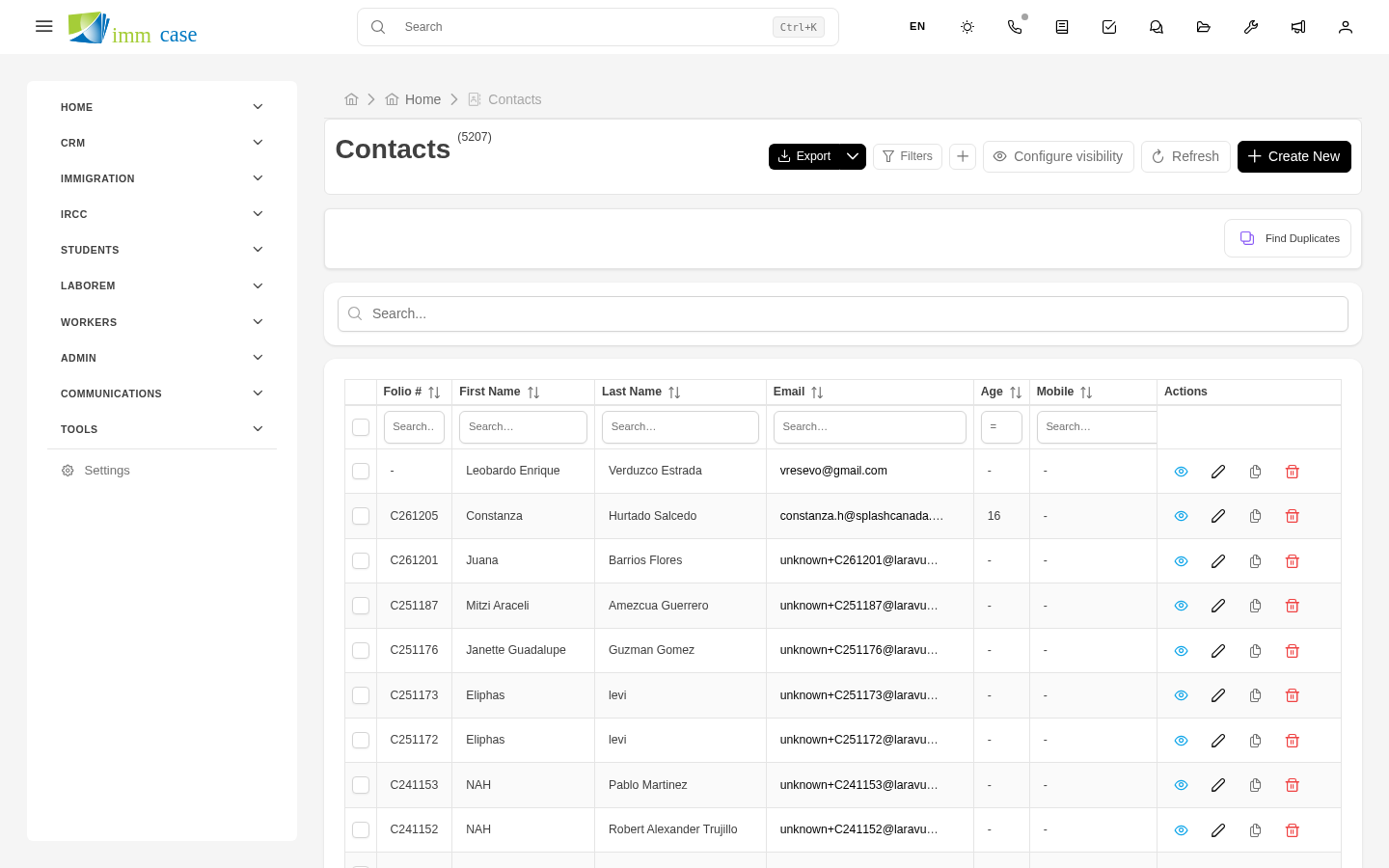
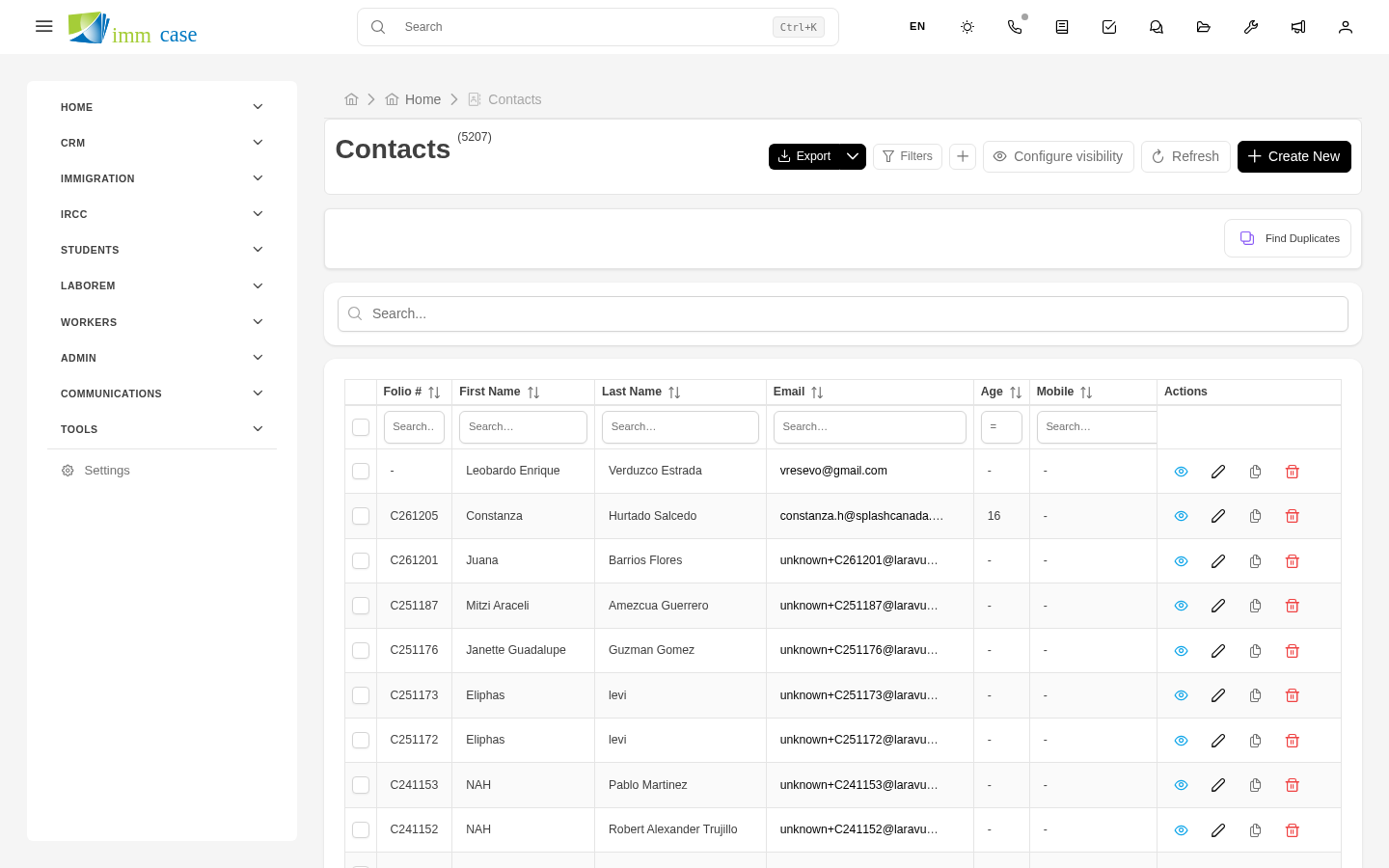
- By name or email: global search (magnifying glass in the top bar) or the search inside the Applicants list.
- By folio: global search. Type the full folio (
CON251) or just the trailing digits. - By passport or ID number: global search, if it's configured as a searchable field. Your administrator decides which fields go into search.
If the search returns two or more records with the same name, it's worth reviewing — it might be a duplicate. More in Find duplicates.
The applicant detail view
When you open an applicant you find:
- Summary — photo, full name, folio, email, phone, side column with quick actions.
- Personal data — date of birth, nationality, gender, marital status, etc.
- Identity documents — passport(s), visa(s), national IDs, expiry dates.
- Address — current and/or historical.
And below, the related tabs, where most day-to-day work happens:
- Cases — every open or closed immigration case for the applicant.
- Documents — files saved in the applicant's auto-folder.
- IMM forms — every IMM form completed or in draft.
- Quotes and Invoices — billing history.
- Emails — every email sent or received associated with this applicant.
- Comments — internal team notes (the client doesn't see them).
- Activity timeline — who did what, and when.
Edit an applicant
Click Edit (upper-right of the detail), modify what you need, and Save. Every modification is recorded in the activity timeline — useful for audit if a question later comes up about who changed what.
Delete an applicant
Deleting is final from the user's view but recoverable by an administrator. ImmCase uses soft-delete: the applicant disappears from your list but stays in a system trash. Only delete when you're sure — if it was a mistake, ask your administrator to restore it from Settings → Trash.
Watch out for
- Duplicates are problem #1. Before creating a new applicant, search first. It's common for someone on the team to already have registered them with a name variant (with or without a second last name, with or without accents).
- Don't put two people in one record. If the applicant's spouse will also apply, create a separate record for them. Then connect them as a family company or as related contacts.
- The applicant's email is not yours. It sounds obvious, but it happens on initial inquiries: the team sometimes uses their own email "so we don't lose it." That confuses things later when forms or confirmations get sent — always capture the applicant's email.
- The name must match the passport. If the applicant goes by Robert day-to-day but the passport says Roberto, ImmCase stores Roberto. Nicknames go in the Bio or Notes field.